 WOWBatangas.com Your Source of Great News and Stories from the Province of Batangas, Philippines



For more information, visit Batangas Lakelands’ Facebook page.


Join us on the inauguration, blessing, and groundbreaking of Multiple Infrastructure Projects in San Jose Batangas.
Programs and Activities
March 08, 2021
6:00 AM | Holy Mass (Archdiocesan Shrine & Parish of St Joseph the Patriarch)
7:30 AM | Blessing of Improvement of Putol Bridge
8:00 AM | Inauguration & Blessing of San Jose New Public Market & New Parking Building
9:30 AM | Inauguration & Blessing of Santo Cristo Don Luis Bridge
10:30 AM | Groundbreaking of San Jose Cultural and Sports Center
11:30 AM | Inauguration & Blessing of San Jose Legislative Building


All Saints’ Day in the Philippines is usually celebrated on the first and second day of November. In the Philippines, this holiday is often referred to as Undas.
All Saints’ Day is an important day in many Catholic countries. As the Philippines is the world’s third largest Catholic country, the country celebrates it with gusto. Traditionally, All Saints’ Day marks a Roman Catholic holiday that celebrates saints who were not awarded their own feast days. It also marks a celebration of the lives of the deceased.
All Saints’ Day in the Philippines is celebrated similarly to the way the holiday is marked in other former Spanish colonies like Mexico. On November 1st each year, people flock to their family plots in cemeteries across the country. They also use this holiday to hold a family reunion where groups of an extended family gather together.
The day is filled with music and food. There is also prayer and religious traditions. At the end of the day, people will often camp overnight in the cemetery to pay their respects to their dead relatives. Visitors remark that Filipinos are remarkably at home among their dead ancestors.
Filipinos are known for having great respect for their dead. To prepare for Undas, families will visit the graves of their ancestors before the holiday to clean up the area and perform maintenance. During the holiday, people will decorate the graves with flowers and candles. The cemeteries will come alive during this period.
In addition to these traditions, other Catholic traditions are also observed. Many cemeteries will hold a special mass during the day. The rest of the day is often marked by periods of prayer and the recitation of the Litany for the Dead.
This holiday is a mix of the observance of the dead and a joyful holiday. Families bring plenty of food and drink for their dead relatives. Some believe that the deceased are taking part in the feast alongside the living. While most bring food directly to the cemetery, other families will also leave food at home on altars for any relatives who aren’t buried in the cemetery.
The Philippines is the largest Christian country in Asia. As a result, much of the country shuts down over these two days. Offices and schools both close during this period.


The Philippines celebrates New Year’s Day with a public holiday every 1 January, as does most of the rest of the world. However, the celebrations really begin on New Year’s Eve and reach a high point with the turning of the clock from 11:59pm on 31 December to midnight on 1 January. Somewhat unusually, New Year’s Eve is also an official holiday here.
Fireworks, good food and good company, New Year’s resolutions, and greeting cards are all a part of the celebration in the Philippines. Attending midnight mass on 31 December is a practice of devout Roman Catholics. Firecrackers and loud noises are traditionaloy thought by some to scare off evil spirits, and leaving doors and windows open is supposed to let the good luck come in.
Parents may tell their children to jump as high as they can at midnight to help them grow taller. Others don polka dot clothes to make the new year more prosperous. And some put 12 fruits on display to symbolise the 12 disciples.


Independence Day in the Philippines is held every 12 June and commemorates the Philippines’ declaration of independence from Spanish colonial rule.
The original Independence Day was held in 1898 in present day Kawit, Cavite where General Emilio Aguinaldo read out the The Act of the Declaration of Independence. Whilst this was an important milestone for Filipinos, the Spanish government did not recognise their independence.
They then went on to give the Philippines to the United States after the Spanish-American war as part of the peace treaty. After a war and the Philippines’ own treaty with the United States, independence was granted to the Philippines on 4 July 1946, coinciding with the American Independence Day.
4 July was celebrated as Independence Day until 1964. After mounting pressure from the community, the government declared that 12 June would be The Philippines’ Independence Day and a national holiday. 4 July in the Philippines would then become the Philippines’ Republic Day.
A parade in Manila marks the official celebrations, attended by the President and government officials. The parade showcases the Philippines’ armed forces as well as some local organisations and the different ethnic groups of the Philippines. Firework displays are also held, particularly in Manila.


Balayan Batangas Founding Anniversary on December 08, 2020.


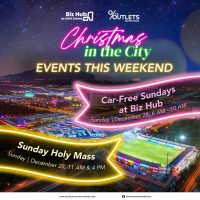

 Join our last Car-Free Sunday of the year at Biz Hub, a perfect way to stay active and enjoy the fresh air.
 Then, gather your loved ones and attend our Sunday Holy Mass as we give thanks for the blessings of this whole year.
 Our extended mall hours still apply this weekend, so you can make the most of your time to dine, shop, and play this holiday season.


Calatagan, Batangas Founding Anniversary December 16, 2020


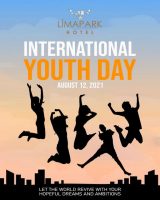


Matuto kung paano dapat i-Brand online ang iyong negosyo o business idea!
Ang mga magrerehistro ay makakatanggap ng Electronic Certificate Of Participation mula sa Sangguniang Kabataan ng Barangay Bulacnin!

 Elevate your Mother’s Day celebration with an unforgettable helicopter tour over Lake Taal on May 11, 2024! Book a room at Limapark Hotel at the rates below and receive complimentary seat/s to the Sky Adventure!